




Maddie Ellis and the Malibu Movie Colony is an old-fashioned mystery serial set during the end of the silent movie era. Join Maddie for an unsatisfactory lunch with old friends, a chance encounter with one one of her colony neighbors, and a visit to the Malibu sheriff’s station that may shed light on the mystery of the midnight intruder.
Maddie drove into town on a warm, sunny February morning to lunch with old friends. She knew at once that the luncheon was a mistake.
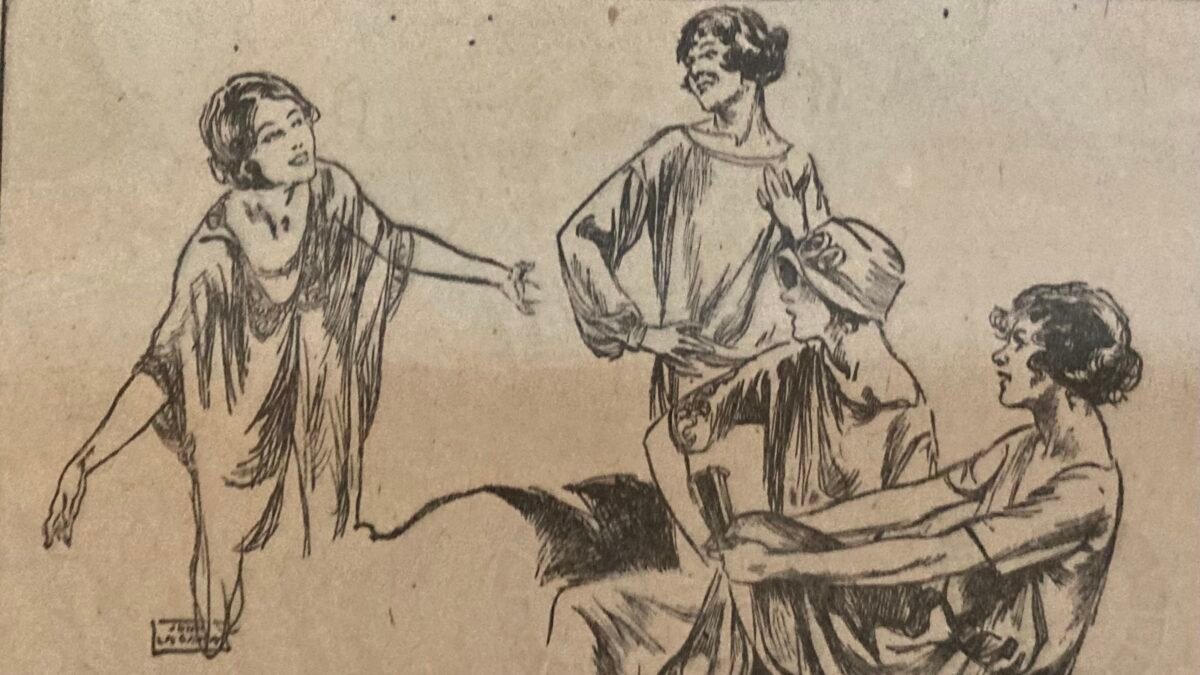
In the five years that she had been away, her friends had dropped out of the movie business, married, and started families. This wasn’t like her reunion with Belle Harrington, who had remained the same dear friend through all of the ups and downs of life. Maddie realized that she now had nothing in common with them. They were elegant, prosperous, and vacuous, where once they had been ambitious, vivacious, and full of passion for the rapidly evolving film industry.
The conversation ranged from their husbands’ foibles to diaper rash, although both ladies had nursemaids to deal with the messier aspects of child care.
“You’ll understand when you have a family of your own,” they told her, kindly. Maddie, who had raised her younger siblings while juggling a career as a writer to ensure that they had enough to eat, had nothing to say to that, or nothing that her old friends would wish to hear.
Maddie was a foreigner here, she realized. The things she had in common with these old friends were so far in the past that they might have belonged to other people’s lives. They had shared a common struggle once for survival and success. The river still swept Maddie along in pursuit of new horizons, new challenges, wonders, but these two had left the depths for the shallows. They were content. She was happy for them, but dismayed as well. Had they changed so much? Had she?
At least lunch was nice, or it should have been. Maddie ate a perfect golden omelette with mushrooms and slices of avocado—a wonderful thing they didn’t have in London. Her friends, on the other hand, ate salads composed of cottage cheese, celery, and that exotic new delicacy canned pineapple, encased in luridly green gelatin. They lamented all the while about their diets.
“How can you eat so much and stay so slim, Maddie?” demanded one.
“You’re living among the celebrities, Maddie, what do they eat?” asked another.
Maddie was able to tell them that grapefruit and Melba toast were all the rage, but after that her part in the conversation languished. Her old friends were often together and shared a common group of friends and associates. It was not surprising that they could have a lively conversation between themselves, but Maddie was soon lost amongst the bewildering cast of husbands, servants, children, and friends that made up this drama. While they did not eat very much, they smoked incessantly. Maddie began to have a headache. She was glad when the ordeal was over.
Maddie parted on cries of, ‘So nice to see you again, my dear,” and “we must do it again soon, why don’t you come to bridge club?’”
“Yes, you must! She’d be a wonderful partner for Mrs Valmont’s brother. He’s quite eligible, you know, Maddie—stocks and bonds—and you really ought to be thinking about settling down, now that you’re back.”
Maddie went wicked and appropriated a line from Jane Austen. “I am sorry, but I simply despise cards,” she said. “I have no pleasure in anything except books.” Then she fled.
While Maddie was engaged in this unsatisfactory luncheon, the weather had turned suddenly from mock summer back to winter. She put the top up on her little red roadster and bundled up in her coat, but it was still chilly. The clouds rushing in to cover the sun matched her mood. She sang to herself to keep her mind off of the uncomfortable feeling that she had said all the wrong things.
Time, like an ever-rolling stream,
Bears all its sons away;
They fly forgotten, as a dream
Dies at the break of day.
That verse by Isaac Watts seemed appropriate and she thought about the dreary prospect of becoming someone whose only thoughts are of diets and domesticity when she spotted a car stranded by the size of the road—not any car, but a Rolls Royce Silver Ghost. She recognized Leon Verlaine and his valet. They had the hood up and were in earnest contemplation of the vehicle’s innards.
Maddie stopped. “Can I do anything to help?” she asked.
“I think it’s past hope and the kindest thing we can do is put it out of its misery,” the old actor told her. “Rupert here is under the sad delusion that there is still hope, and that a new fuel pump will put everything to rights.”
“I can’t help with a fuel pump, but may I offer you a lift?” Maddie asked. “The Constable’s Office has the nearest phone. You could send for help while your man performs first aid. Or I would be glad to give you both a ride home, if Mr Rupert wouldn’t mind riding in the rumble seat.”
“Kind lady, you are a delivering angel,” Verlaine said. “Come Rupert. leave the poor beast. You can call for someone to come collect it. It isn’t likely to go anywhere in that state, and there are no guarantees that we will be graced by another delivering angel.”
They climbed into the Nash and set off. Maddie was impressed that Rupert was able to maintain his demeanor as the perfect butler even when perched in the back.
“I had no idea that you had thwarted the Hungarian nobility to rescue Hoffmann’s film,” Miss Ellis,” Verlaine said.
“Neither had I,” Maddie said, startled. “Ah, Miss Pollard must have published her story. How horrible is it? Will I be obliged to change my name and go into hiding? I just read about someone who lives under the name of ‘Saunders’.”
“In a woods with a sign over his door, by any chance?” Verlaine responded, amused.
“Yes,” Maddie was surprised.
“Not horrible, just a bit…fanciful,” Verlaine said with relish. “You appear to have broken the heart of a Hungarian count.”
“Not a poet? I seem to have come up in the world.”
“Who needs a poet when she can jilt the scion of an ancient and noble family?” Verlaine replied.
“So true,” Maddie said gamely.
“Oh, my dear young woman, you aren’t worried about that silly old besom’s column are you? It’s all good fun. And, after all, ‘there is only one thing in the world worse than being talked about, and that is not being talked about.’”
“Oscar Wilde?”
Verlaine raised an elegant eyebrow at her. “Yes. Very good. I wouldn’t have expected an American to be conversant with Wilde.”
“And I wouldn’t have expected a Shakespearean of your calibre to know about the inhabitants of A.A. Milne’s Hundred Acre Wood,” Maddie laughed. “I spent the past five years in London, but I would think anyone with a love of literature would know Wilde. He was brilliant and tragic.”
“Ah, London. I miss her!” Verlaine sighed. She’s cold and capricious, but I love her.”
“Would you ever go back?” Maddie asked.
“I think about it sometimes, but no. I like it here. Wilde’s writings are delightful, but he made a sad end, you know. It rather puts one off life in the old county. Here, people mostly leave you alone to live your own life. Everyone is either so busy or so eccentric themselves that they haven’t time to worry about other people’s eccentricities. I like that.”
“I do, too,” Maddie confessed. “Even if sometimes one still gets pressured to embrace conformity and join bridge clubs.”
“Angels and ministers of grace defend us,” Verlaine said, with mock piety. “How deadly. I hope you declined with excruciatingly polite incivility.”
“I regret I did exactly that,” Maddie said.
“Never regret,” Verlaine said. “Conformity is entirely over rated. All it gets you is mediocrity.”
Lieutenant McCay was at his desk doing paperwork. He was used to stranded motorists turning up on his doorstep and showed Rupert where to find the phone.
“Can I have a word, Miss Ellis?” the lieutenant asked. “Let’s step in here, if you don’t mind?” he gestured to the empty courtroom. Maddie followed him in and watched as he shut the door behind him.
“Cocoa, Miss Ellis, comes in tins, but so does opium. Specifically, Mexican opium, which has been coming into this country for several years.
“How much would four cocoa tins of opium be worth, do you think?” Maddie wondered aloud. “Enough to make it worth coming back to collect them, even if you knew the house that was supposed to be empty was now occupied?”
“I would say so,” McCay replied. “Mind you, there is no proof that there is anything suspicious about your cocoa tins, but it is interesting. I had a word with my higher-ups and they had a word with the coast guard. We’ll be keeping a closer watch on the Malibu coast. I thought you would like to know.”
“I hope you are not in trouble with the law, Miss Ellis,” Verlaine said, as they returned to the car. His tone was mocking.
“Someone broke into my house the night I arrived,” Maddie told him. “It was an unnerving experience. Nothing appeared to have been taken, but then they came back again while I was out. The lieutenant was following up.”
“It is an uncomfortable feeling, isn’t it?” Verlaine now sounded serious. “Rupert arranged to have our locks changed after we were burgled in November. I’m sure he would be delighted to put you in touch with the locksmith.”
“Yes, Miss,” the man said.
“And here I was hoping it was assassins sent by that Hungarian nobleman,” Verlaine said, his tone gently mocking again.
“Demanding that I return the Star of Budapest, a diamond of great worth?” Maddie suggested.
“Exactly!”
“Mr. Verlaine, have either you or Mr. Rupert seen anything strange at the Colony?”
“Stranger than some of the clothing the residents wear?” he asked. “Or the appalling things they eat and drink? No, not really, but I haven’t been here much over the winter. I’ve sometimes seen lights in the bay, late at night—when I can’t sleep, I go out and look at the stars, or I did before I broke my ankle. I like to think it’s rumrunners, but it might as easily be fishing boats. Except for the burglaries last November, I would say life there is entirely untroubled, but then, I wasn’t aware until now that your house had been broken into. That is disturbing.”
Maddie dropped her passengers off at their house.
“If you ever need anything, Miss Ellis, day or night, and we are in residence, please come and let us know,” Verlaine told her. “I’m an old crock now, but Rupert is a handy fellow in almost any situation, and I know he would be glad to help a neighbor.”
Rupert nodded. “Any time, Miss,” he said.
They parted on the friendliest of terms.
Verlaine had a reputation for possessing a wit so cutting that his conversation could make the soul bleed, but a sarcastic tongue was sometimes a defensive weapon. Every time Maddie spoke with him he was polite, amusing, clever, and kind. He could be cutting, especially to the people he didn’t like—he and Johnny Roberts did not get on well, and she’d heard him cross figurative swords with Milo, but he was unfailingly civil to the makeup artists and the costume people and the assistants and the pages, who often bore the brunt of actors’ outbursts. That, to Maddie, said a lot about a person’s character. And he had a sense of humor.
Here was someone who lived his own life. He did not care about what anyone thought of him and would scorn to pretend interest in anything he found distasteful. Why should he care? He had a long and successful career that had enabled him to live life entirely on his own terms.
No, Leon Verlaine was, as Violet at the colony’s little general store would say, “the berries.”