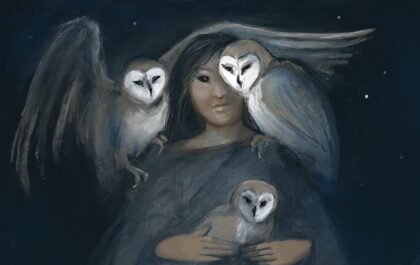



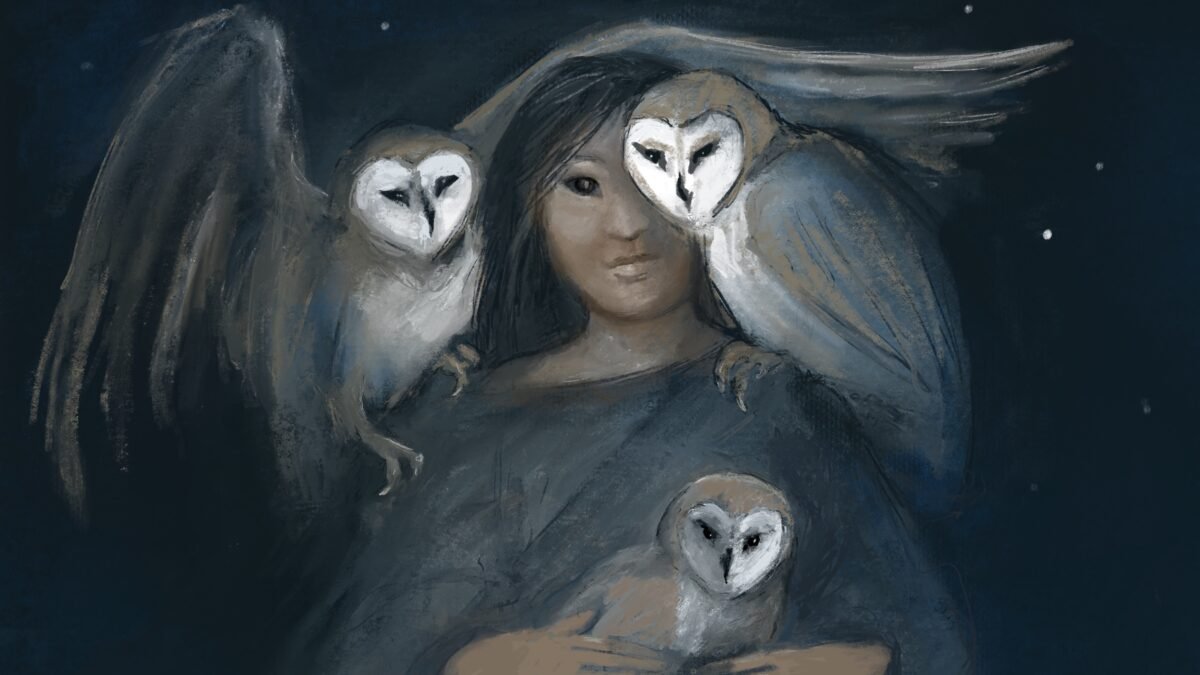

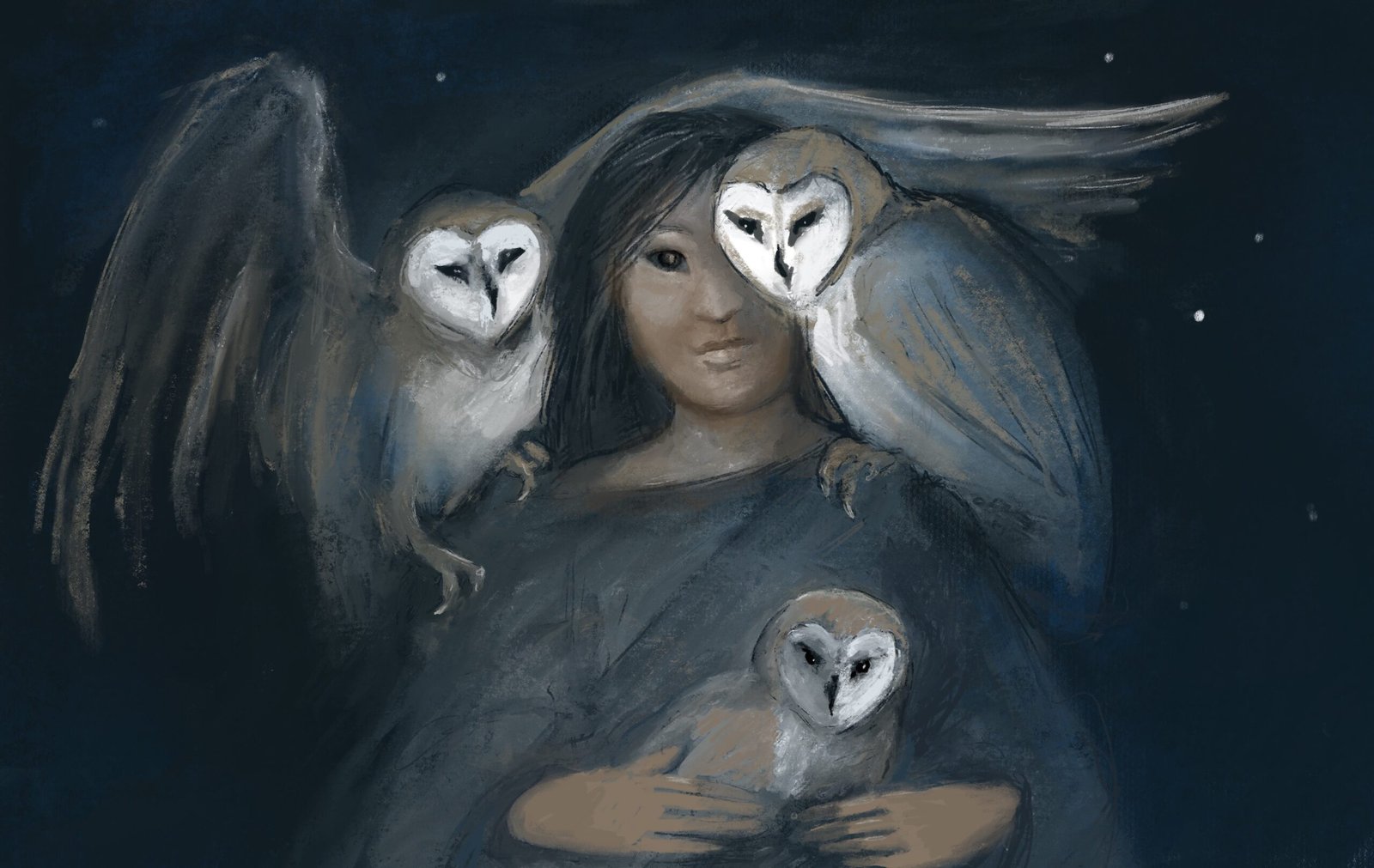
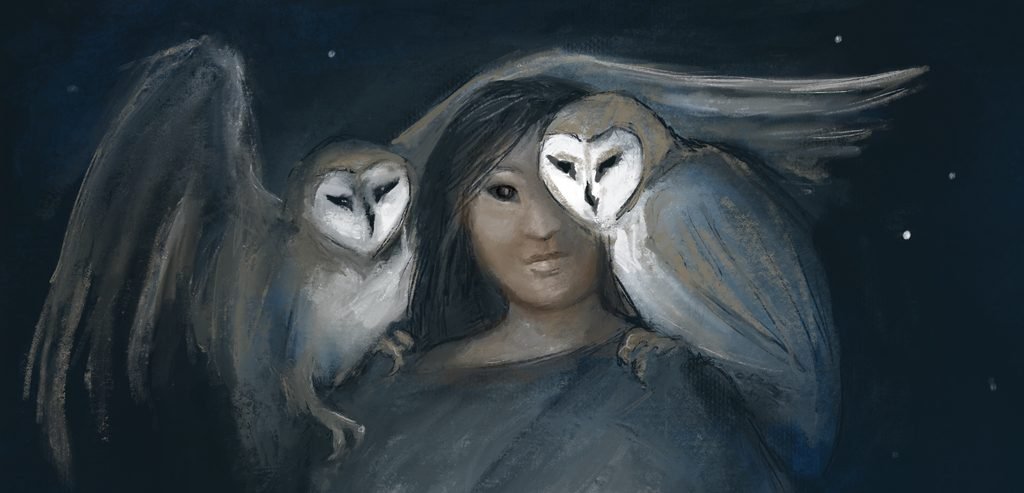
She flies on silent wings. Her appearance is an ominous omen. Those who respond to her eldritch call are doomed. Don’t look. Whatever happens, do not follow her cries into the darkness. Those who do are rarely seen again. Her name is La Lechuza, and she is a vengeful spirit, a night terror, a shape shifter who can appear as a woman or as a great, white owl.
Most stories about La Lechuza originate in Northern Mexico and Texas, but this dark legend has an unlikely connection to the Santa Monica Mountains.
Lechuza beach and canyon are located in western Malibu. The beach is a beautiful one, with rock formations and secluded coves. The canyon, often spelled Lechusa, is a small one, located in mostly undeveloped open space between Decker and Encinal canyons. There’s a seasonal stream there that runs through rugged terrain.
There are mundane reasons why this geographical location is named Lechuza. The word means “barn owl” in Spanish—the ordinary, common avian variety, Tyto alba, and there are still plenty of owls here.
Chumash language specialist Richard Applegate, writing for the Journal of California Anthropology in 1974, speculated that Lechuza was derived from the Chumash word “Lisiqsihi,” a Ventureño name for “beachworm,” and there is no shortage of beachworm colonies on this stretch of coast. Their fragile sand castles are everywhere at low tide, and are said to also be the source of the name Sequit Canyon, nearby.
However, one of the earliest written references to this place is on Malibu Rancho landowner Matthew Keller’s 1870 plat map of the area, and it is written on this map as “La Chusal,” another of the names of the supernatural owl woman La Lechuza.
So, which is it? Was this beach and canyon the home of owls, a supernatural entity, or just a humble worm?
Actor, activist, and fifth-generation Californian Leo Carrillo was convinced that the canyon was home to La Lechuza, the owl woman, and the evidence to support this extraordinary claim is a family story handed down to him by his father. Carrillo shared the legend in his 1961 autobiography, The California I Love, published shortly after his death in 1961.
When Leo Carrillo was a small child, his father once took to a cave in Sequit Canyon, not far from Lechuza canyon and beach, and told him a story about his grandfather, José Raimundo Cabrillo, and his encounter with the Owl Woman of Malibu—La Lechuza.
José Raimundo Carrillo was one of the soldiers who accompanied the first Portola Expedition from San Diego to Carmel in 1769. He was serving at the Presidio of Santa Barbara, when he took a solo hunting trip into the Santa Monica Mountains.
The story doesn’t include dates, but this was most likely prior to 1804, when Malibu was awarded to another veteran of the Portola Expedition as a land grant, and no later than 1806, when José Raimundo Cabrillo was transferred to San Diego. He became the commandant of the Presidio of San Diego and served there until his death in 1809.
According to Leo Carrillo’s father, José Raimundo was a fearless explorer and hunter who was famous for killing grizzly bears armed with only a shield and a sword. On this trip he was hoping to kill a mountain lion to make a rug for the home he was building up north. It was spring, and creeks were running, and there was plenty of game, and no sign of other people.
Far up the canyon, he found a cave. Instead of mountain lions, it was occupied by a woman dressed in deerskins, and her three children. There were stone tools, a pile of tanned skins, and a stone metate for grinding seeds and acorns.
José Raimundo was intrigued. He began leaving gifts of meat for the family.
He had two additional encounters with the woman and her family. During the first, the woman was attacked by a mountain lion. José Raimundo rushed to help but the woman’s oldest son who was no more than five successfully fought off the big cat.
José Raimundo visited the woman’s home a final time before leaving the canyon. Leo Carrillo writes that the cave was dark, but that the woman’s eyes shone in the firelight, huge, and dark and reflective, like the eyes of an owl, and that José Raimundo was suddenly filled with the conviction that this was not a mortal woman, but was instead the dread spirit La Lechuza. However, instead of hexing him, the woman smiled at him and offered a “sign of good fortune and farewell,” the “Indian equivalent of the Spanish Vaya con Dios (go with God).”
Reassured, he rode away, convinced that La Lechuza had given him her blessing.
“My father told me this story at the cave itself in Malibu Sequit Canyon when I was very small,” Leo Carrillo wrote. “The Owl Woman lived not far from my present adobe home. I think perhaps her spirit has blessed me, as she blessed my great-great-grandfather. At least I like to believe so and to express my thanks, too, to La Lechuza.”
Leo Carrillo was a passionate advocate for land conservation. His actions on the State Beach and Parks Commission helped lay the groundwork for the creation of the Santa Monica Mountains National Recreation Area. Leo Carrillo State Park, a unit of the SMMNRA, protects much of the area José Raimundo would have explored on that hunting trip, potentially including the cave of the owl woman.
The story strongly suggests that the woman José Raimundo encountered in the Malibu back country was a Chumash woman making a life for herself and her children in a world that had been completely upended in the space of just a few years by genocide. Almost the entire Indigenous population had been rounded up and sent to the missions or else they had died of diseases brought by the colonists. Then again, she might have been La Lechuza. Either way, José Raimundo met her with kindness and received a blessing in return.
There is no way of knowing how the story ended for the owl woman of the Santa Monica Mountains, but it seems likely that José Raimundo’s story is the source of the place name Lechuza, and that this Chumash woman lives on in the name, transformed by the power of the storyteller from mortal woman to supernatural owl spirit.
La Lechuza: The Owl Woman of Malibu