




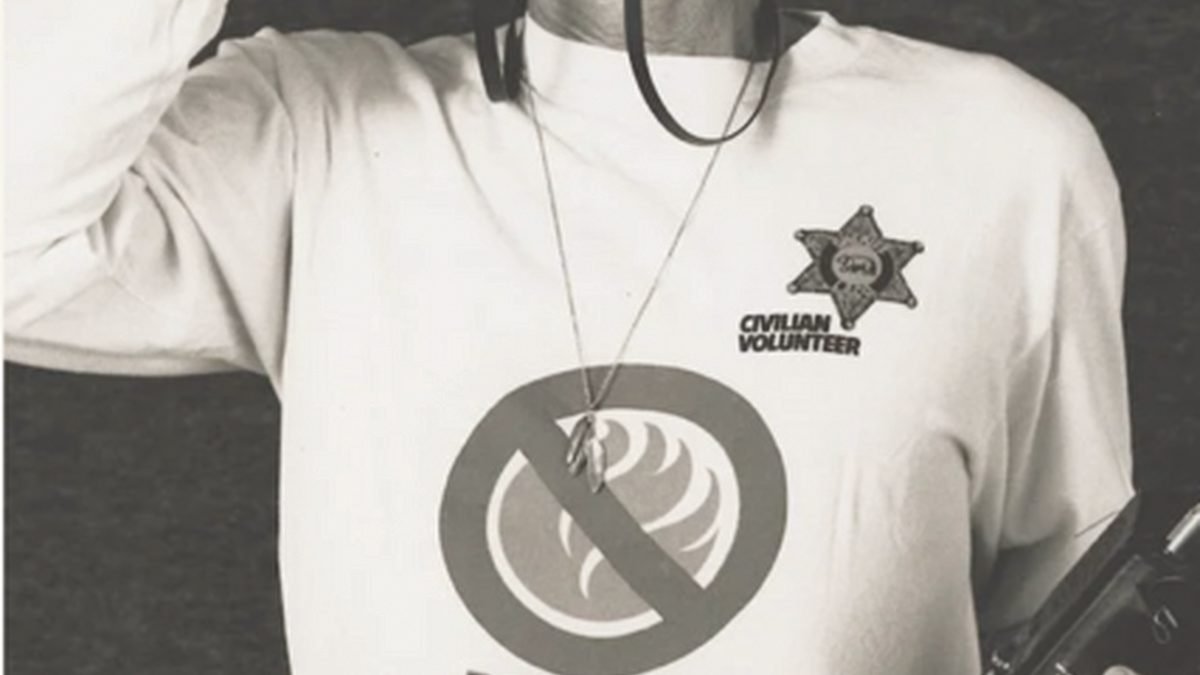

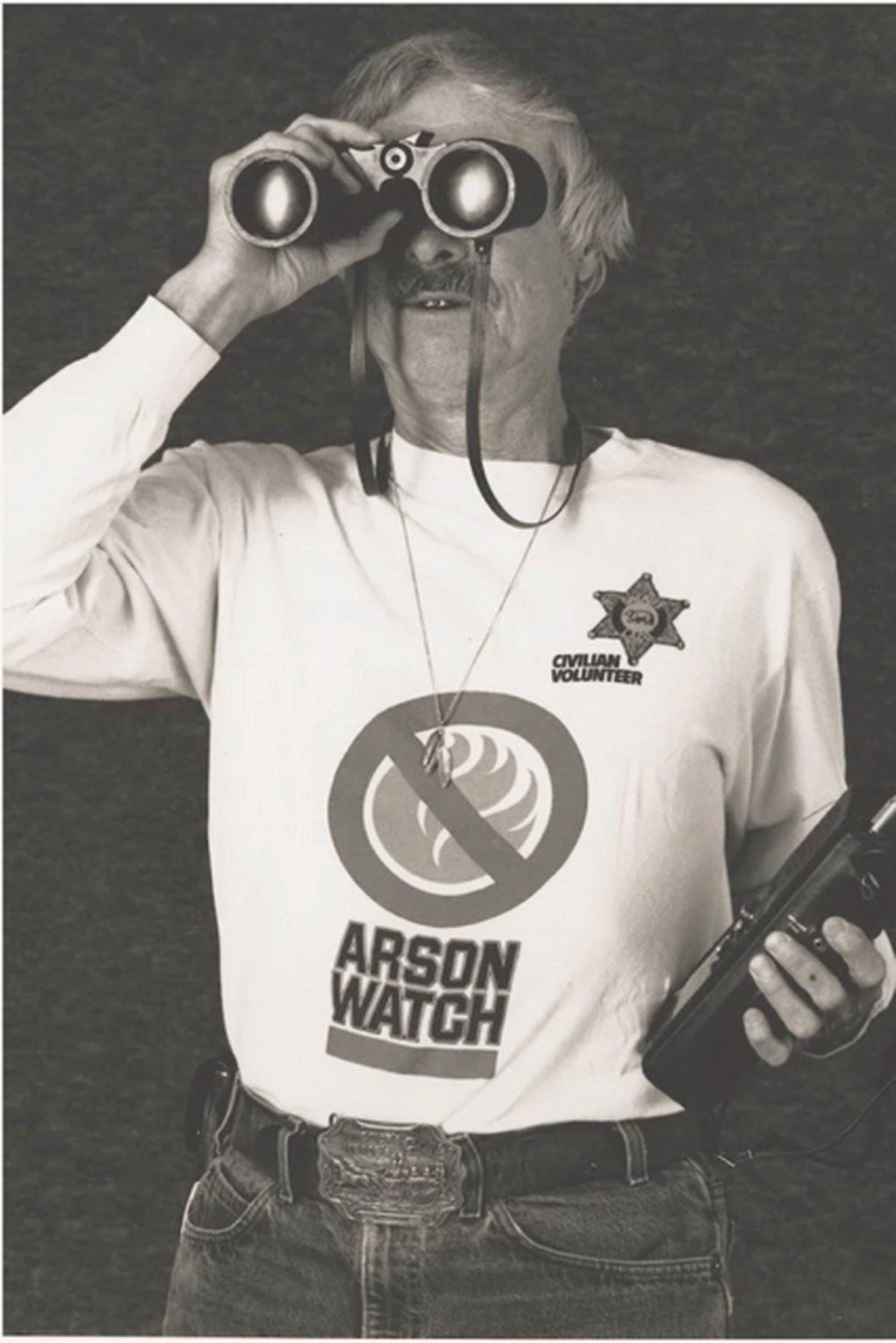

For more than 40 years, Arson Watch volunteers have watched Topanga’s roads during its most dangerous conditions. Much of their work happens in the short window of time before an emergency—when a blocked gate, a curl of smoke or one careless decision can change everything.
On October 15, Milton Stumpus saw black smoke and became the first to report what would be called the Bryson Fire in Malibu. As he spoke with 911, the smoke turned to visible flame. He stayed on scene until the fire crew from station 99 arrived minutes later and released him.
Milton is with the Malibu Arson Watch team and knows what fire can take: he lost his home in the Palisades Fire. On this day, he was the first to see the smoke and raise the alarm.
Another volunteer passed the same spot shortly before the fire ignited. That’s why Arson Watch needs enough people on the roads for as long as possible during Red Flag and other emergency conditions. One patrol may end; the need for another set of eyes doesn’t.
For more than four decades, Arson Watch volunteers have served as trained eyes and ears across the Santa Monica Mountains. The program is affiliated with the Los Angeles County Sheriff’s Department and operates under the guidance of the Lost Hills Sheriff’s Station. Volunteers patrol during Red Flag conditions, communicate by radio and report hazards. They are not police officers or firefighters. Their job is to notice, assess, communicate – and know when to step back.
The name can create the wrong picture: volunteers hunting through the canyon for an arsonist. The reality is quieter and, in some ways, more complicated. A cigarette tossed from a window. A car blocking an emergency gate. Metal striking metal in dry grass. Smoke rising where no smoke should be.
Arson accounts for only a fraction of California wildfires. Many begin with equipment failures, power lines, lightning or human carelessness. Will Alford put it bluntly: “The things that we’ve stumbled across on our patrols are not always arson. They can be ignorance.”
During the Palisades Fire, volunteers encountered a man at Dirt Mulholland preparing to set up a barbecue, eat dinner and spend the evening outside while the fire was already burning nearby. At home, lighting a grill can feel routine. In the wildlands during dangerous fire conditions, it is anything but routine.
I have seen how quickly ordinary fun can become a fire risk. During my Arson Watch training, a seasoned volunteer and I persuaded three high school students not to take fireworks onto a hiking trail. At Topanga Beach during a Red Flag Warning, I watched an engagement party release a sky lantern. Fortunately, the wind carried it over the ocean. After I explained the danger, the group apologized and put away the remaining lanterns.
There have been people cutting rebar in tall grass and others smoking in high-risk areas. Each action can look small enough to dismiss. In a dry canyon, small is how many emergencies begin.
The goal is persuasion, not confrontation. Volunteers explain the risk, ask the person to stop and report the situation through the proper channels. When something feels unsafe, they back away. Watching over the canyon does not mean pretending to have authority the volunteers do not possess.
In January 2025, the scale of the work changed. The Palisades Fire forced residents from their homes, closed roads and stretched emergency resources across several communities. For Arson Watch, a conventional patrol was no longer enough.
Will Alford and Richard Brody stepped into whatever roles the community needed. Their days included helping at road closures and with traffic flow, watching evacuated areas for signs of looting and continuing to patrol Arson Watch routes. They stayed in daily contact with local law enforcement and helped orient first responders and news crews arriving from outside the area—people who did not know Topanga’s roads, access points and neighborhoods.
They delivered water and fuel to homebound residents. They checked on pets and other animals. They met people at road closures, collected food and supplies, and carried them back to first responders.
For evacuated residents, the hardest part was often not knowing. Alford and Brody recorded daily video updates and sent group texts describing conditions in the canyon. The messages could not erase the uncertainty or bring anyone home sooner. But they gave displaced neighbors a trusted view of what was happening in the place they had been forced to leave.
None of this resembled an ordinary patrol. Yet none of it came from nowhere. It grew from the same foundation Arson Watch had spent decades building: local knowledge, established communication, relationships with law enforcement and a willingness to show up. During a disaster, that knowledge becomes a form of infrastructure.
A Watch Built Over Decades
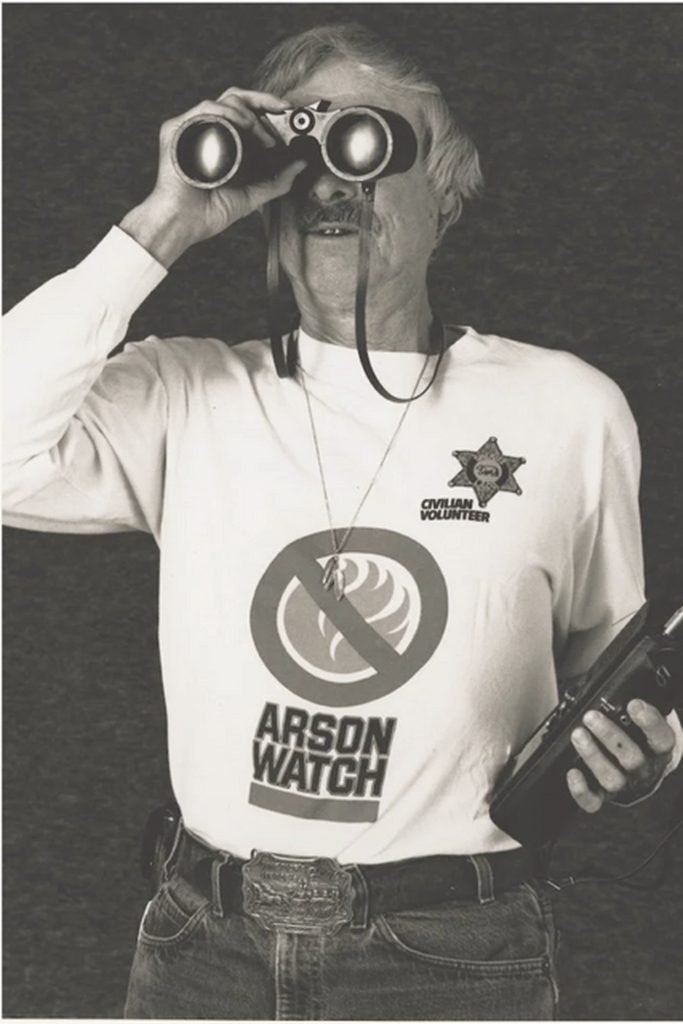
That foundation began in 1982 after an intentionally set fire in Dayton Canyon. Actor and Liberty Canyon resident Buddy Ebsen learned that the blaze had been caused by arson and joined with his daughter Cathy and Topanga resident Allen Emerson to organize neighbors.
The idea was straightforward: train local volunteers to patrol the mountain roads they knew, make their presence visible, and work alongside law enforcement to identify danger early.
Emerson turned that first burst of concern into something durable. When the Topanga Town Council asked for someone to organize the effort, he was reportedly the only person who raised his hand. He kept it raised for the next 25 years, coordinating Arson Watch until his death in 2007.
Neighbors came to know him behind the wheel of the mobile command unit, wearing a Sheriff’s Department volunteer vest and working the radio. He helped write the Topanga Disaster Survival Guide and was part of the small founding group behind what became the Topanga Coalition for Emergency Preparedness,(TCEP) The network that proved so valuable during the Palisades Fire was already taking shape.
The reasons people join have changed with each generation of volunteers, but the emotional calculation is often the same: watch from home, or find a way to help.
One Arson Watch volunteer remembers watching a fire climb a hillside toward homes she had never considered vulnerable. Her own home stood in an even more heavily wooded area. “I just had to be more part of the solution rather than sitting at home and watching it happen,” she said.
Scott King joined in 2002 after the September 11 attacks, initially fearing that the Santa Monica Mountains could become an easy target for someone intent on starting fires. He now believes that assumption was probably wrong. The desire to protect his community remained.
“To me the transcendent threat here in the Santa Monica Mountains is fire,” King said. “So I need to be doing something about keeping us all safer. Arson Watch fills that need.”
The Next Watch
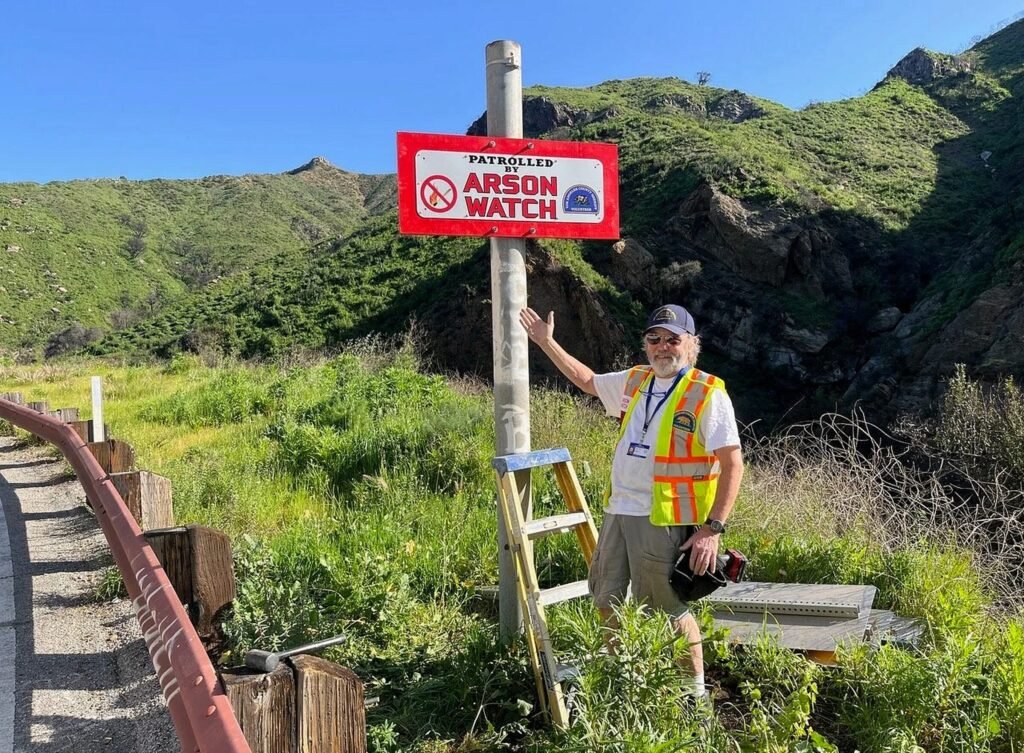
Arson Watch today is more structured than the organization many longtime volunteers first joined. One volunteer who leads recruitment efforts points to better-prepared meetings, shared spreadsheets and WhatsApp channels that help volunteers stay organized and connected. Friends of the Community Arson Watch and Disaster Services helps fund equipment, training and outreach.
The watch is also part of a wider preparedness network. Volunteers participate in ReadyFest and work alongside TCEP, Station 69, the Lost Hills Sheriff’s Station and other emergency-preparedness, conservation and fire-safety organizations. Home hardening, defensible space and knowing how to report smoke are part of the same work: reducing risk before an emergency begins.
But the organization still faces a difficult gap between the people who support the mission and those who complete the application and training. At the time of these interviews, Topanga had 59 volunteers. The goal is 100.
Why 100? “More eyes and better coverage across our community,” Riggs answered.
The number becomes meaningful on a map: no Arson Watch volunteer currently lives on Greenleaf, where a resident might spot smoke from a home, vent or nearby brush before it’s visible beyond a curve or ridgeline. Since volunteers can’t always be available, a strong roster helps keep key routes and high-risk posts covered when something happens. One more volunteer is not simply another name on a roster. It is another part of the canyon watched by someone who knows it.
Volunteers complete background checks and training and contribute at least 30 hours a year through patrols, meetings and community events. Red Flag activations do not arrive when the calendar is convenient. The commitment is flexible, but it is real.
Not every resident will join. They can still learn what smoke to report, why a blocked gate matters and when outdoor work can create a spark. A safer Topanga depends on more than 100 trained volunteers. It depends on thousands of people understanding that familiar activities become different choices during high wind and low humidity.
Back on that dark road at Saddle Peak and Stunt, Stateman did not put out a fire or confront a suspicious stranger. She simply stayed visible. Two neighbors slowed down and thanked her.
There is no incident report for the fire that never starts. No siren announces the moment someone changes their mind. Much of Arson Watch’s value lives in that unmeasurable space.
The goal of 100 begins there: one more trained person on one more road, paying attention. In Topanga, watching over the canyon has always been work, best shared.
What Arson Watch Watches For
A Red Flag patrol is less about searching for an arsonist than noticing everyday activity that could become dangerous:
- Smoke where it should not be—whether from brush, a campfire, barbecue, chimney or fireworks
- Smoking or cigarettes tossed from vehicles
- Weed trimming, metal cutting or other work that can create sparks
- Vehicles parked in dry grass, where a hot muffler could ignite vegetation
- Cars blocking trailheads, emergency gates or access roads
- Overgrown brush and other visible fire hazards on public land
- Activity that appears unusual for the location or dangerous under current conditions
Volunteers observe, document and report. They are not law enforcement officers or firefighters, and personal safety comes first.
What Our Community Can Do
You do not have to join Arson Watch to help protect the canyon.
- During Red Flag conditions, rethink ordinary activities. Avoid fireworks, outdoor flames and work that can create sparks near dry vegetation.
- Keep emergency access clear. Do not block trailhead gates, fire roads or other access points.
- Report smoke early. If you see or smell smoke, call 911. Give the clearest location you can and describe what you see.
- Notice without confronting. If someone’s behavior appears dangerous, prioritize your own safety and contact the appropriate authorities.
- Harden your home. Maintain defensible space, reduce combustible material near structures and keep emergency information current.
- Consider joining Arson Watch. Volunteers complete an application, background checks and training, then contribute at least 30 hours annually through patrols, meetings and community events.
- Help grow the watch. At the time of these interviews, Topanga had 59 volunteers and a goal of 100—enough trained neighbors to provide broader coverage throughout the canyon.
Learn more or apply: arsonwatch.org
By Michelle Lange, Arson Watch Volunteer

Arson Watch: Watching Over Topanga for 40+ Years
