




Claire Fordham interviews retired race driver Jeff Kline
Whatever Jeff Kline turns his hand to, he does it brilliantly. He’s been a phenomenally successful businessman and salesman, but it’s as a racing driver and husband that Jeff has truly excelled. Buckle up for a story of speed, success, resilience, and true love.
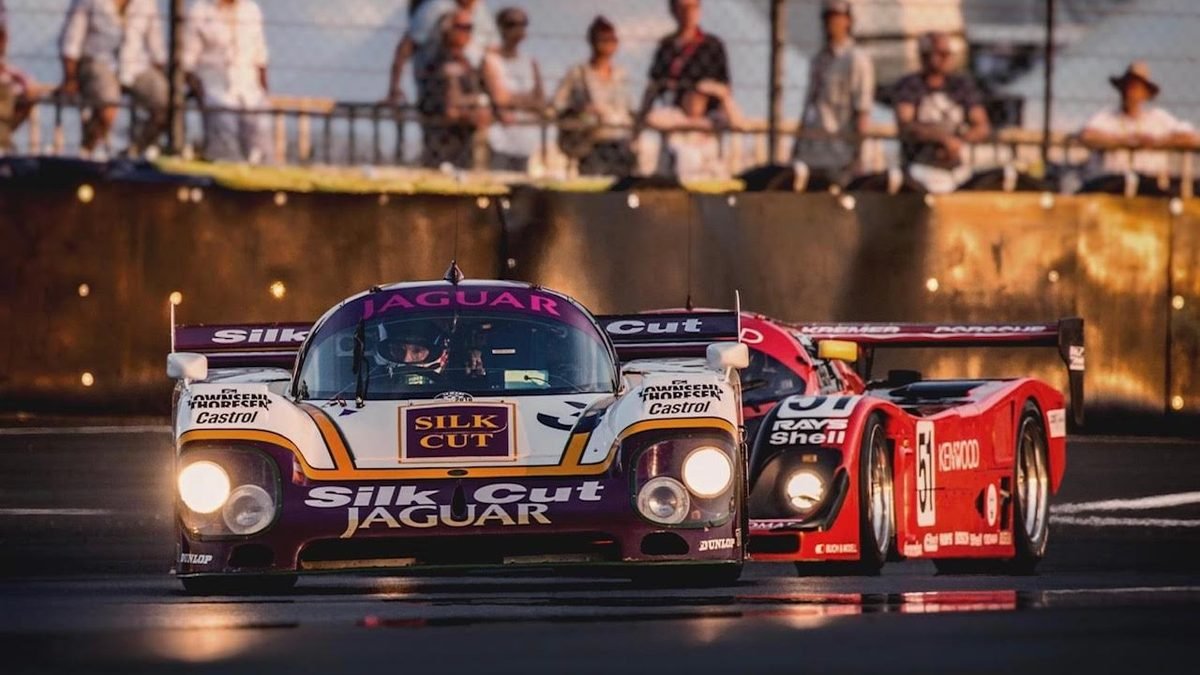
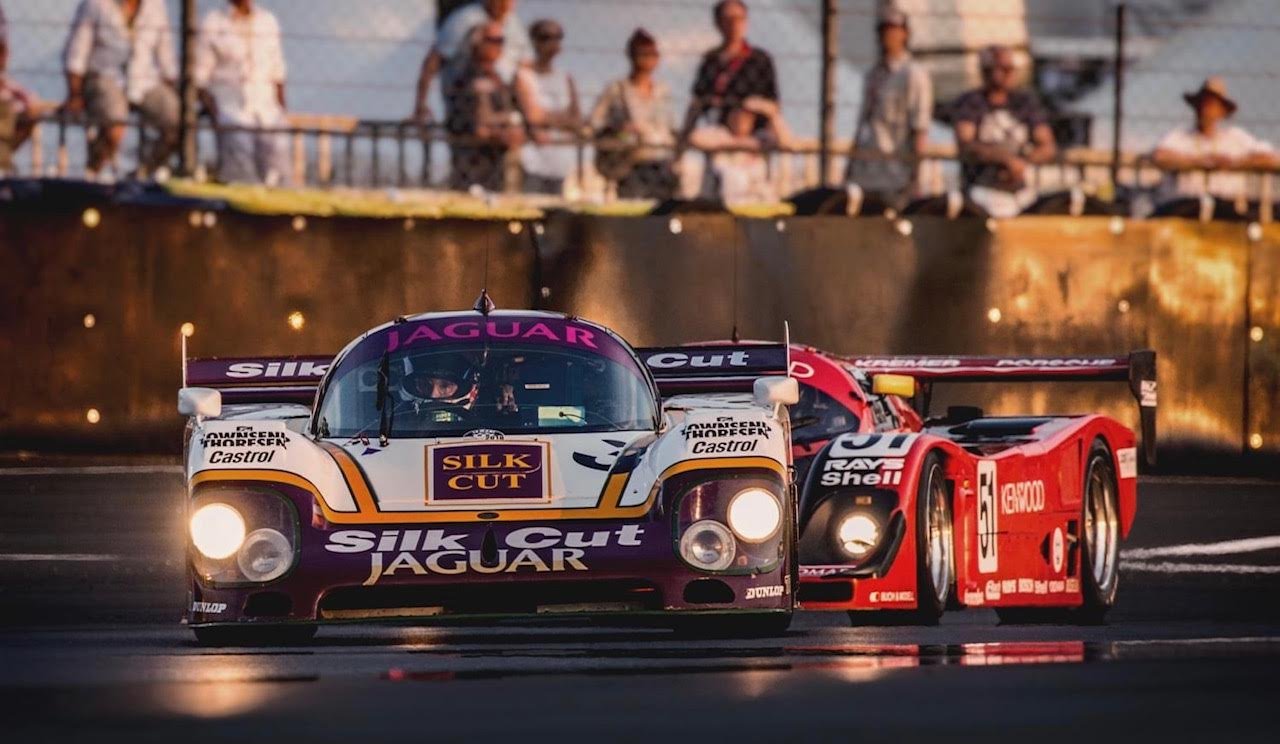
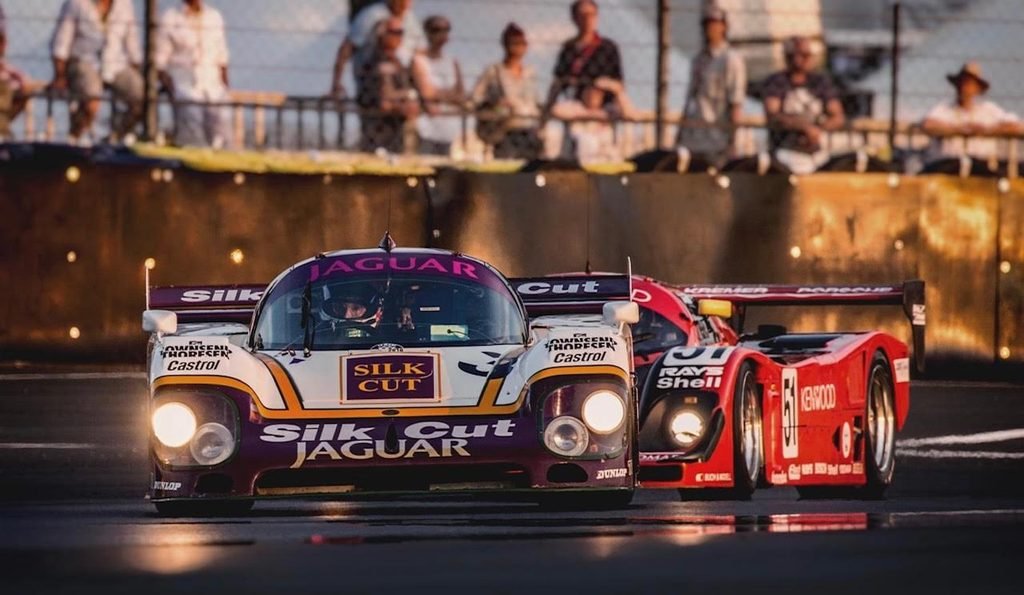
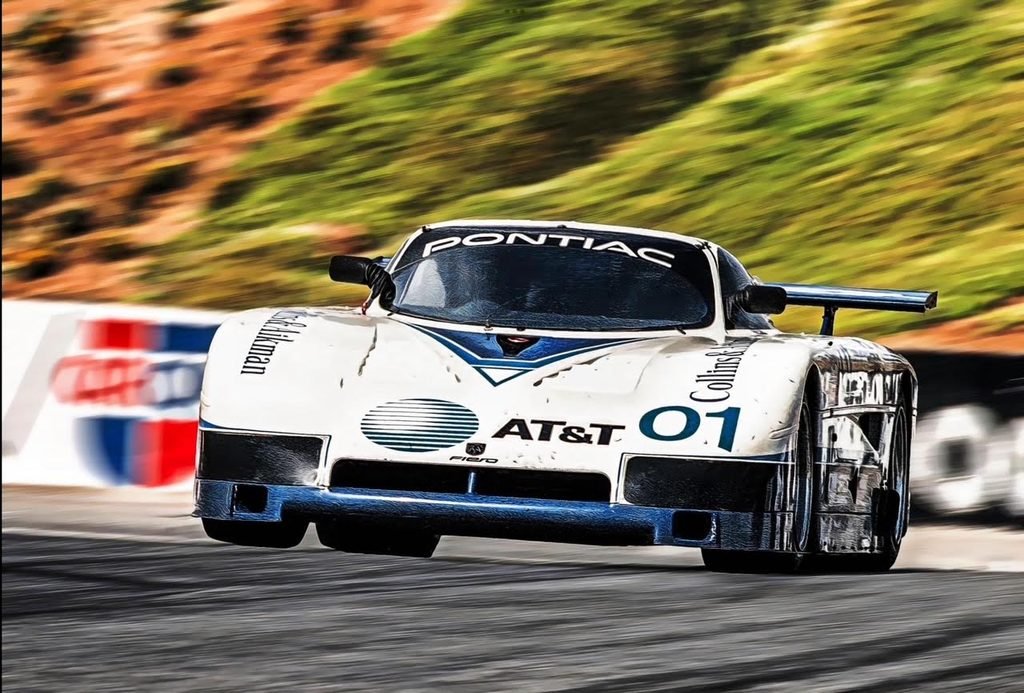
In his helmet-wearing heyday, Jeff won twice at the infamous Daytona 24 hour race, in 1981 driving a Porsche and in 1987 driving a Factory Pontiac Spice GTPL, secured three class wins at the legendary 12 Hours of Sebring race, and competed in the 1989 24 Hours of Le Mans driving for TWR Silk Cut Jaguar.
Jeff dominated the Sports Car Club of America Nationals between 1966 and 1978, winning 87 races. Jeff also won four pro races at Elkhart Lake Wisconsin, one of the world’s fastest permanent road racing tracks. He won 19 professional races all over the USA.
Cheering Jeff on was his high school sweetheart and now wife of almost 60 years, Judy—who did take some time off from supporting Jeff to raise their daughter, Morgen, and study to be a therapist. After qualifying, Judy spent 22 years as the clinical director at a school for children with behavioral problems. So, no slouch herself.
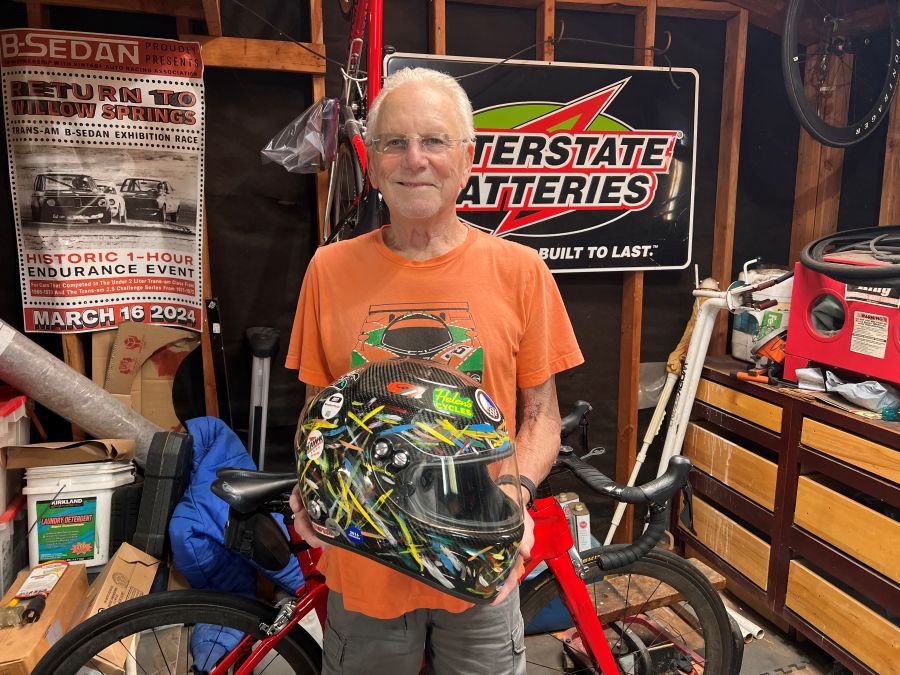
Born in 1944 in the small steel mill town of McKeesport, Pennsylvania, Jeff Kline says he was kind of a juvenile delinquent. “I didn’t break any laws, but I was kind of uncontrollable as a child. I think I’m ADHD or whatever it’s called. I’m very action-oriented, high-energy. I absorb information quickly. Judy calls me a recovering hyperactive child. But in those days, when I was 14, my parents thought the best course of action was to send me away to the Valley Forge Military Academy in Wayne, Pennsylvania.
“My dad was probably going through a mid-life crisis because, in 1957, when he was 42, he bought a 1957 Karmann Ghia. So when I wanted to go somewhere I couldn’t walk to, I’d borrow the car. Mostly with permission, but if it was the middle of the night, I would push it around the corner before starting the engine.
“I would go to open fields and drive my dad’s Karmann Ghia sideways, spin around. It was fun and I realized I could control the car doing it. But, you know, saying you want to be a race driver is like saying you want to be an actor. You have to fight your way to the front of the group, because everyone, every kid, wanted to be a race car driver. You need money to be a racing driver and I didn’t have any. But I was a hustler and I strategically befriended the right people. I was willing to do the grunt work to get myself there.”
In Mckeesport where Jeff grew up, his school pal Mitchell had wealthy parents and they bought him a brand-new Corvette. “Mitch wanted to race it, so I would go with him and help him repair the car.”
Jeff hated it at the military academy and asked to come home, but his father refused. “So I left on my own, aged 15, and took a bus to an old school friend who was at college in Pennsylvania.
“When I woke up in the morning, my dad was standing over me, very aggravated. He wanted me to go back, but I wouldn’t. So I went to public school for a year and a half, and then we moved to West Los Angeles in 1961 – the day before my senior year in high school, aged 17.”
University High School is where Jeff met Judy “the most beautiful girl in the school.” And they’ve been together ever since. The couple married when Jeff was 22 and Judy was 21.
“While I was at the military academy,” said Jeff, “my roommate’s father had a Jaguar and my roommate used to talk about this car all the time. Because my family home was 300 miles away, I would go to my friend’s house for weekends. One of his neighbors raced Porsches. This was around 1959, 1960. We’d look at the cars and I found them really interesting,” said Jeff, who (unsurprisingly) got his driver’s license at 16.
Shortly after the family moved to LA, Jeff’s dad needed a new car. “I talked him into getting a used Austin Healey. I don’t know what he paid for it. But the first time he drove it when it rained, he got drenched because it had side curtains instead of windows. That was enough for him and he gave the car to me.”
Finally old enough to get a racing license (the minimum age was 21), Jeff’s first race was in the Austin Healey. “I have no idea where I came, but I know I broke the transmission shifting into first gear. My first real race was in 1966 driving a Lotus I bought while on active duty for the National Guard.”
The Austin Healey broke down often. “I took it to a repair shop in West LA, right near University High School, kind of halfway between school and Judy’s home. The people who worked there had race cars, so I started coming back and asking if I could clean parts, do this or that. I was persistent enough that they accepted me. I no longer had to pay for repairs on my Austin Healey and I was around race cars.”
Jeff and Judy went to races as spectators. One of their first dates was to a race at Dodger Stadium. Judy had to hide in the Austin Healey to get in as Jeff couldn’t afford the entry fee. “I’d watch and take it all in,” said Jeff. When he sold the Austin Healey, Jeff bought a Mini Cooper and began competing in that. “Sometimes it would just be cones in a parking lot.”
Jeff recognizes that reliability is more important in a race car than speed (the old racers’ maxim is: to finish first, first you have to finish). His favorite car to race was a Pontiac Spice, a General Motors factory run car. “I drove fast and I drove skillfully. I set 15 lap records, 13 pole positions and six wins in that Pontiac Spice in 1987—all over the United States.”
According to Jeff, part of being a good racing driver is anticipating danger from other drivers. Did he ever crash badly? “Less than three or four probably in all my career. But I did crash at Daytona once. It was kind of humorous. There were two similar cars in front of me, both GTP car—800 horsepower, 1800 pounds. We were all passing a guy in a different, lower class. The first two overtook him and he didn’t realize there was a third coming (me) and he turned in on me and I hit a wall.
The nose came off and sailed 100 feet in the air and disintegrated right in front of me as it landed. Scared the living daylights out of me. My parents were at an amateur race where I flipped over in an Alpha in 1969. They never came to watch me again.”
Judy never wavered in her support of Jeff’s racing career. She was usually there on Sunday race day, but avoided the track until then, choosing to spend her time studying and exploring until the actual event.
“I never really worried about the danger,” said Judy and has this advice for anyone interested in the secret to their long and happy marriage. “If your spouse is passionate about something, be supportive of it.”
In 2010, on a plane coming back from racing at Goodwood in England, Judy told Jeff that was her last race. “A race for me had become like spending all day in Vons parking lot,” she said.
Having started racing in 1966, Jeff drove his last race at Daytona in 2000. Then he went into racing vintage cars, owned by wealthy people around the world, who paid Jeff handsomely to race their precious machines for them. “I drove probably close to a hundred of those. I was also paid expenses, so I could take Judy with me. Monaco, Goodwood (which Judy found too posh), Paris. All over.”
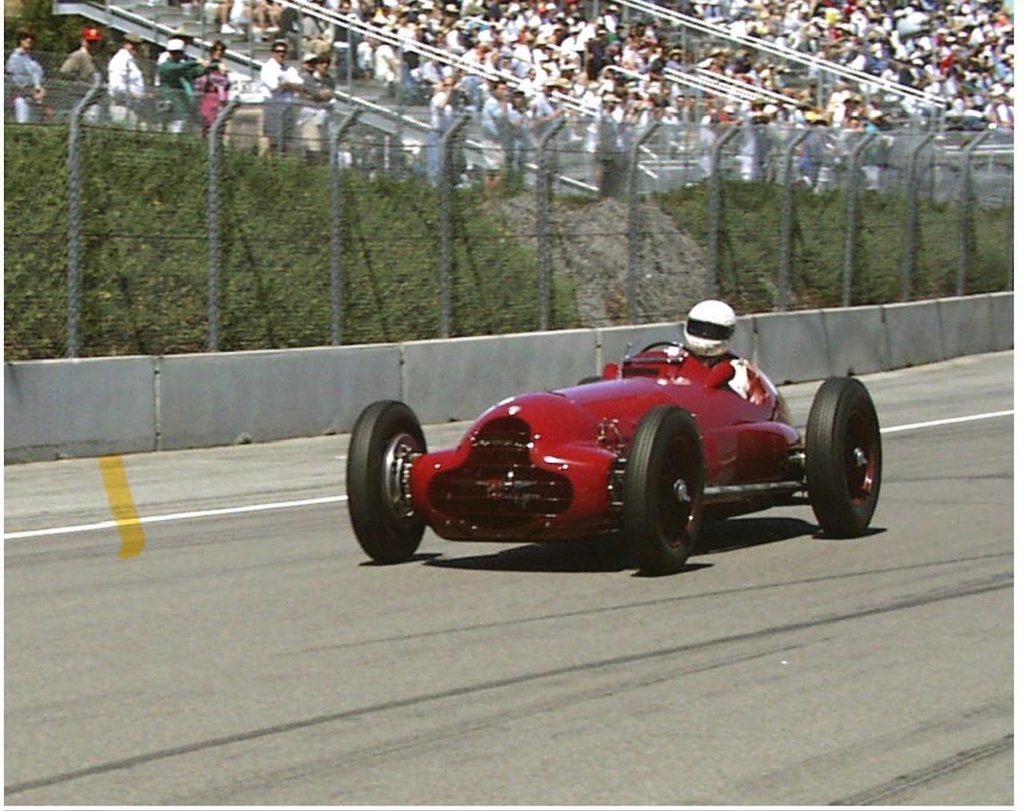
These historic racing cars are big business. Jeff raced a 1937 Alfa Romeo Formula One car that subsequently sold for $6M. A Ferrari he drove went for $12M.
When Jeff raced as an amateur from 1965 to 1978, he didn’t get paid, but it didn’t cost him anything. “All my expenses were covered and I never spent any of my own money on racing. Most of the people I was racing against were spending their own money.”
Jeff drove for the works factory teams at Alfa Romeo, Mazda and Pontiac (General Motors). He drove Ferraris and Porsches for private owners. From 1979 to 1985, Jeff was part of the works’ Mazda team. “From 1985 until the early ’90s, when I raced for General Motors in different divisions, I did get paid really well but throughout all that time I always had a real job, even when I was earning more money annually as a race driver.”
Jeff was a District Manager for Bristol Myers and developed marketing programs for them. After Bristol Myers, Jeff became a regional VP of sales and marketing for Merck (now GSK) with 180 people reporting to him. All his employers gave Jeff as much time off as he needed. He’d work Monday to Thursday, then head off to race weekends, and be home by Sunday night.
From 1985 to 2000, this extraordinarily high achiever, ran a Venture Marketing Group where he did tech consulting and created 14 tech startups. Two of them went public.
After 87 wins out of more than 200 amateur races, Jeff won 19 of his 136 professional races. “That doesn’t sound like a lot, but many racing drivers never win a race. I just like to win. At the time, I was in the top five of all-time winners in the series I raced in.”
While Jeff was out there clipping apexes and racking up laps, Judy was studying for her masters, raising their daughter, and taking care of the house.
In 1972, the Klines bought the land their Topanga home is built on and have lived there ever since. “We’ve evacuated three times,” said Jeff. During the Palisades fire, they relocated to their daughter’s house in Mar Vista. The upside was spending more time with Morgen, her husband, Yuji, and 16-year-old grandson Theo, a junior at Pali High.
Jeff retired from professional racing in 2001 at age 57, but continued to drive Vintage Cars professionally around the world until 2024. He retired from his consulting business and working in 2000.
Judy continued to work in her private practice in the Palisades and also as Clinical Director at a school for children with behavior problems, as well as kids on the spectrum.
After he retired, Judy got tired of Jeff being in shorts and a tee shirt all the time and only interacting with his bicycle. She said to Jeff, “you like cars, why don’t you go find a job selling them rather than puttering around here everyday?”
Jeff went to Bob Smith BMW assuming they would never hire a 60- year-old, but they did. “My computer experience got me the job as internet manager,” said Jeff.
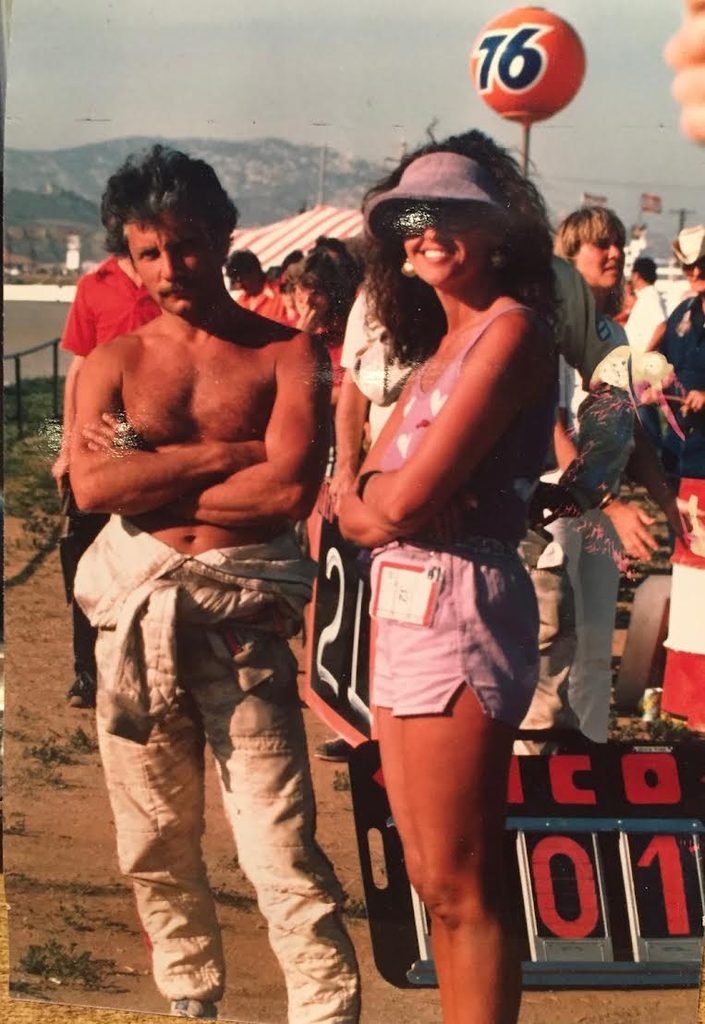
“By year two, I was #42 out of 4200 sales people in the USA. I retired from Bob Smith as the Internet Sales Director in 2013 at 69 – one month shy of 70. I continued to go back weekly to train salesmen and managers until Covid in 2020.”
Judy suffered a broken necrotic hip, which was misdiagnosed in 2018. After a second opinion, she had a hip replacement in September, 2019. That hip replacement exacerbated her already present fibromyalgia and Jeff became Judy’s caregiver.
Jeff still loves cars. He’s owned 20 Porsches and eight BMW M3s. He currently drives a BMW X3 SUV as it accommodates Judy’s wheelchair easily. It’s also good for transporting Jeff’s bicycles. “I cycle 8,000 miles a year,” said Jeff. “I either run or cycle every day.”
Even at 82, Jeff is still fit. Which is why he was cycling again just two months after a recent knee replacement. “The doctor said he’s never seen anyone of any age recover from a knee replacement as quickly as I did.”
Does he eat a healthy diet? Once Jeff and Judy had stopped laughing at that question, Jeff said, “I like hot dogs. Or tuna. One meal a day. I make healthy food for Judy.”
Jeff learned to cook so he can make meals for his wife. “He’s wonderful,” said Judy. Before illness struck, the couple would run 10K races together.
Jeff is always busy. He fixes and makes things in his garage. The Klines’ favorite pastime these days is to watch Formula One Grand Prix racing on TV. Lewis Hamilton is their favorite driver. And they love the Netflix F1 documentary series Drive to Survive. In December, Jeff and Judy will celebrate their 60th wedding anniversary. After all they’ve been through, they’re still very much together. And still laughing.
